

L’ELICOTTERO NEI CANTIERI TEMPORANEI E MOBILI
HELICOPTER AT TEMPORARY AND MOBILE CONSTRUCTION SITES
- 02 Giu 2025
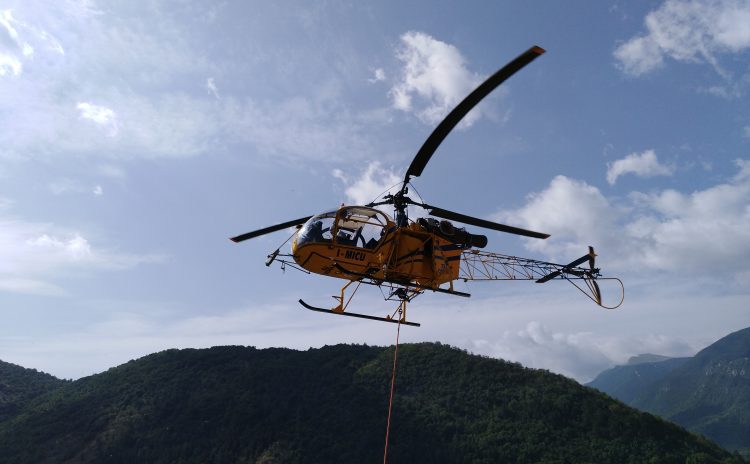
L’utilizzo di un elicottero in luoghi di lavoro definiti come cantiere (rif. Titolo IV D.Lgs.81/2008 e s.m.i.) può essere quasi indispensabile in caso di aree difficilmente raggiungibili e/o di attività di montaggio/smontaggio strutture; questa scelta è legata alle caratteristiche intrinseche di tale mezzo ovvero, in primis, l’elevata capacità di manovra e la velocità di spostamento. La scelta di utilizzare tale mezzo deve comportare obbligatoriamente considerazioni e scelte specifiche legate agli aspetti di sicurezza connessi; infatti l’arrivo di un elicottero in cantiere è origine di pericoli aggiuntivi rispetto a quelli già presenti legati sia alla presenza di persone e di opere provvisionali sia connessi alla tipologia di area di lavoro vista nella specifica ottica dei Lavori Aerei.
Allo scopo di evidenziare tali aspetti e di permettere una definizione delle attività organizzative e di coordinamento necessarie per ridurre i rischi connessi all’utilizzo di un elicottero in attività di cantiere, sono state elaborate dall’I.S.P.E.S.L. delle LINEE GUIDA “Valutazione dei rischi nei cantieri temporanei e mobili nei quali è previsto l’utilizzo di elicotteri” che mettono in luce gli aspetti da trattare nella redazione del PSC di cantiere e le specifiche attività da mettere in atto e verificare durante i lavori.
Nello specifico il PSC deve pertanto comprendere la valutazione di diversi aspetti e relative misure di sicurezza da adottare propri di attività svolte con l’ausilio di un elicottero, tra i quali è bene sottolineare i seguenti:
- Area d’involo riferita al cantiere;
- Fattori climatici;
- Caratteristica dell’area di cantiere (presenza di immobili, fossati, alberi, linee elettriche, ecc.);
- Dislocazione zone di carico/scarico.
I rischi principali, conseguenti all’uso dell’elicottero, necessariamente da considerare sono i seguenti:
- Caduta dall’alto di persone e/o materiali;
- Elettrocuzione per cariche elettrostatiche;
- Rumore;
- Sbalzi eccessivi di temperatura;
- Esposizione a contaminanti (solidi sollevati);
- Urto con parti in movimento;
- Spostamento incontrollato del carico.
Durante la gestione del cantiere devono essere messe in atto opportune verifiche sia preventive che in campo durante le fasi di allestimento e di coordinazione del cantiere stesso.
Di seguito un elenco non esaustivo delle verifiche da effettuare.
Verifiche preliminari
- Verificare che l’azienda esecutrice sia in possesso di tutte le autorizzazioni ministeriali necessarie per il tipo di lavoro al gancio previsto dal cantiere;
- Verificare che il velivolo sia in regola con le manutenzioni necessarie (responsabilità del pilota);
- Verificare l’idoneità del sistema di carico e l’imbracatura utilizzata (per l’imbracatura dei carichi utilizzare solo materiale certificato e conforme alla normativa vigente);
- Informarsi preventivamente sul peso e sugli ingombri da trasportare e definire il sistema di aggancio più idoneo (tenere conto delle forze d’inerzia dovute alle accelerazioni del velivolo e alla resistenza del carico all’aria, sia per il moto dell’elicottero sia per lo spostamento d’aria dovuto al movimento delle pale);
- Definire i sistemi di comunicazione con per lo svolgimento in sicurezza di tutte le operazioni: il personale a terra dovrà essere in continua comunicazione col pilota dell’elicottero.
Verifiche da effettuarsi prima del volo
Elicottero:
- Verificare che la quantità di carburante sia sufficiente in relazione al volo da compiere;
- Verificare il centraggio del carico in funzione del tipo di elicottero impiegato per il trasporto;
- Verificare che il carico sia distribuito e vincolato correttamente;
- Verificare la presenza della documentazione di bordo: certificato di navigabilità con relativi allegati, certificato di immatricolazione, licenza di stazione radio, nota assicurativa, manuale di impiego, quaderno tecnico di bordo, liste di controllo e foglio di carico e centraggio;
Area di atterraggio:
- Definire l’area d’atterraggio e verificare che sia sufficientemente estesa e priva di eventuali ostacoli;
- Prima dell’inizio dei lavori, l’Impresa dovrà sottoporre a verifica da parte del pilota il sito scelto per l’atterraggio e per le operazioni di carico;
- L’area di atterraggio dovrà essere segnalata a terra con il simbolo di eliporto (H);
- Informare i lavoratori affinché non mettano a rischio la propria e l’altrui sicurezza con comportamenti irresponsabili;
- Predisporre con dovuto anticipo tutto quanto occorra per evitare manovre affrettate.
Verifiche da effettuarsi durante l’esecuzione dei lavori
Elicottero:
- Durante il volo tutto il personale a bordo dovrà avere sempre allacciate le cinture di sicurezza;
- Utilizzare l’elicottero nel rispetto delle norme e dei limiti specificati nel certificato di navigabilità e nel manuale di impiego;
- Utilizzare correttamente i DPI: casco, guanti, cuffie o auricolari, occhiali paraschegge, impianto ricevente e calzature antinfortunistiche;
- Tutte le manovre specifiche riguardanti l’elicottero, compreso l’apertura e la chiusura delle porte, dovranno essere effettuate esclusivamente dal personale;
- Verificare l’assenza di oggetti che possano essere spostati dalle turbolenze provocate dal rotore;
- Accertarsi che non vi siano fuochi o persone che fumino nella zona di rispetto (raggio d’azione dei vortici d’aria)
Area di atterraggio:
- I lavoratori esterni dovranno tenersi a distanza di sicurezza dall’elicottero, nel caso in cui ci si debba avvicinare farlo al termine delle operazioni d’atterraggio avendo la certezza di essere visti dal pilota;
- Prestare particolare attenzione alle oscillazioni del carico in sospensione;
- Utilizzare correttamente i DPI: casco, guanti, cuffie o auricolari, occhiali paraschegge, impianto ricevente e calzature antinfortunistiche;
- Durante l’avvicinamento dell’elicottero non distrarsi, non volgere lo sguardo verso l’elicottero in avvicinamento, e prestare la massima attenzione al gancio di carico e ai lacci vuoti (prima di effettuare qualsiasi operazione, lasciare cadere al suolo i ganci di carico);
- Dopo aver agganciato il carico dirigersi subito verso il settore di sicurezza, dare l’ordine di sollevamento solo dopo avere controllato che tutte le persone si trovino al sicuro e non effettuare altre operazioni o lavori prima che l’elicottero si sia allontanato;
- Tutte le operazioni di carico e scarico del materiale dovranno avvenire sotto la stretta sorveglianza dell’assistente di volo preposto;
- Tutti i carichi dovranno essere sollevati con cautela, evitando movimenti improvvisi e scoordinati;
- Evitare di esporsi alle zone pericolose dell’elicottero ed in particolare al rotore di coda;
- Verificare che non vi siano materiali personali non saldamente ancorati (caschi, borse, ecc.), in quanto tali oggetti potrebbero urtare contro il rotore o spinti in modo casuale contro persone o cose.
 Ing. Luca Persia
The use of a helicopter in workplaces defined as construction sites (ref. Title IV of Legislative Decree 81/2008 and subsequent amendments and additions) may be almost indispensable in the case of areas that are difficult to reach and/or activities of assembly/disassembly of structures; this choice is linked to the intrinsic characteristics of this means of transport, that is, first and foremost, the high manoeuvrability and speed of movement. The choice to use this means must necessarily involve considerations and specific choices related to the safety aspects connected; in fact, the arrival of a helicopter on site is the source of additional dangers compared to those already present related to both the presence of people and temporary works and related to the type of work area seen in the specific perspective of Air Works.
In order to highlight these aspects and to allow a definition of the organizational and coordination activities necessary to reduce the risks associated with the use of a helicopter in site activities, have been developed by the I.S.P.E.S.L. of the GUIDE LINES “Risk assessment in temporary and mobile sites where the use of helicopters is expected” that highlight the aspects to be addressed in the preparation of the PSC of the site and the specific activities to be implemented and verified during the work.
Specifically, the PSC must therefore include the evaluation of different aspects and related safety measures to be adopted for activities carried out with the help of a helicopter, among which it is worth noting the following:
– Involvement area referred to the construction site;
– Climate factors;
– Characteristic of the construction site area (presence of buildings, ditches, trees, electric cables, etc.);
– Dislocation of loading/unloading areas.
The main risks, resulting from the use of the helicopter, necessarily to be considered are the following:
– Falling from a height of people and/or materials;
– Electrocution for electrostatic charges;
– Noise;
– Excessive temperature jumps;
– Exposure to contaminants (raised solids);
– Impact with moving parts;
– Uncontrolled load displacement.
During site management, appropriate preventive and field checks must be carried out during the set-up and coordination phases of the site itself.
Below is a non-exhaustive list of the checks to be carried out.
Preliminary checks
– Verify that the executing company is in possession of all the ministerial authorizations necessary for the type of work on the hook provided by the site;
– Check that the aircraft is in order with the necessary maintenance (responsibility of the pilot);
– Check the suitability of the loading system and the sling used (use only certified material that complies with current regulations for slinging loads);
– Inform yourself in advance about the weight and dimensions to be carried and define the most suitable coupling system (take into account the forces of inertia due to the accelerations of the aircraft and the resistance of the load to the air, both for the motion of the helicopter and for the movement of air due to the movement of the blades);
– Define the communication systems with for the safe performance of all operations: the ground personnel must be in continuous communication with the pilot of the helicopter.
Checks to be carried out before the flight
Helicopter:
– Check that the amount of fuel is sufficient in relation to the flight to be made;
– Check the centering of the load according to the type of helicopter used for transport;
– Check that the load is correctly distributed and secured;
– Verify the presence of the documentation on board: certificate of airworthiness with its attachments, registration certificate, radio station license, insurance note, user manual, technical logbook, checklists and sheet of loading and centering;
Landing area:
– Define the landing area and check that it is sufficiently large and free of any obstacles;
– Before the start of the work, the Company will have to submit to verification by the pilot the site chosen for landing and loading operations;
– The landing area shall be marked on the ground with the heliport symbol (H);
– Inform workers so that they do not endanger their own safety and the safety of others with irresponsible behaviour;
– Prepare in good time all that is necessary to avoid hasty manoeuvres.
Checks to be carried out during the execution of the work
Helicopter:
– During the flight, all personnel on board must have their seatbelts fastened at all times;
– Use the helicopter in accordance with the rules and limits specified in the certificate of airworthiness and in the user manual;
– Use the PPE correctly: helmet, gloves, headphones or earphones, splinter protection glasses, receiving system and safety footwear;
– All specific manoeuvres concerning the helicopter, including the opening and closing of doors, must be carried out by personnel only.
– Check that there are no objects that can be moved by the turbulence caused by the rotor;
– Make sure that there are no fires or people smoking in the area of respect (radius of the whirlwinds of air);
Landing area:
– Outside workers should keep a safe distance from the helicopter in the event that they are to be approached at the end of landing operations, being sure to be seen by the pilot;
– Pay particular attention to the oscillations of the suspended load;
– Use PPE correctly: helmet, gloves, earphones or earphones, splinter protection glasses, receiving system and safety footwear;
– When approaching the helicopter, do not become distracted, do not look towards the approaching helicopter, and pay the utmost attention to the loading hook and empty laces (before performing any operation, let the loading hooks fall to the ground);
– After attaching the load, proceed immediately to the safety area, give the lifting order only after checking that all persons are safe and do not perform any other work or operations before the helicopter has left;
– All loading and unloading operations must be carried out under the strict supervision of the designated marshaller;
– All loads must be lifted with caution, avoiding sudden and uncoordinated movements;
– Avoid exposing yourself to the helicopter’s danger zones and in particular to the tail rotor;
– Check that there are no personal materials not firmly anchored (helmets, bags, etc..), as these objects could hit the rotor or pushed randomly against people or things.