

Il marmo Portasanta
"Portasanta" marble
- 04 Apr 2026
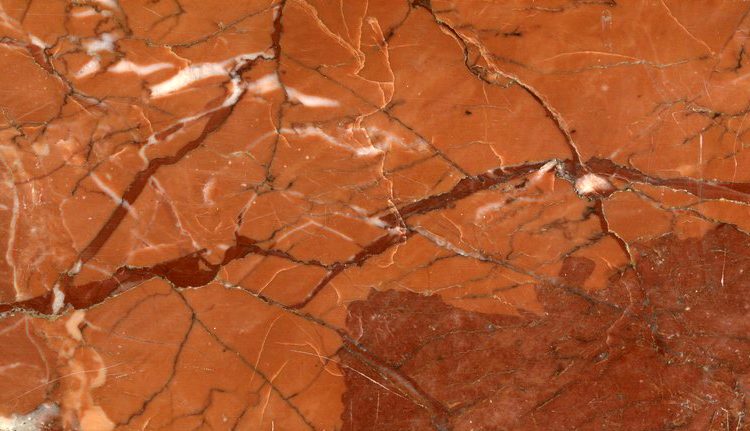
Caratteristiche geologiche e petrografiche
Calcari a grana fine e marmi a leggermente metamorfosato del Triassico, generalmente brecciati con clasti da due a trenta centimetri di diametro. Comuni le stiloliti e le fratture riempite di calcite bianca. I calcari contengono crinoidi, bivalvi e altri fossili. Il portasanta reticolato è un calcare parzialmente ricristallizzato con ossidi di ferro concentrati in abbondanti stiloliti.
Principali caratteristiche tecniche
Il nome della pietra deriva dalla Porta Santa che introduce nella basilica di San Pietro in Vaticano, dove compone i montanti, come in altre basiliche romane.
Questi sono solo alcuni dei numerosi riutilizzi della pietra attivamente estratta dai romani a partire dal I sec. a.C. e lavorata, già molto tempo prima, dai greci. Secondo le cronache pervenuteci, era uno dei marmi colorati più importanti in uso nell’antichità e citato da Plinio, Strabone e Teofrasto.
Esistono diverse qualità di portasanta, ma alcune sue caratteristiche restano tipiche. Sono pietre a grana fine e compatta, prevalentemente rosso spento, rosa salmone e grigio. A volte il colore è arancio, bruno o giallo, ma mai verde. Il portasanta è occasionalmente percorso da numerose fratture riempite di calcite bianca e alcune varietà sono caratterizzate da una particolare retinatura.
Le cave chiusero in epoca bizantina e per secoli se ne perse traccia. Le opinioni circa l’origine del portasanta variarono sino alla fine del XIX sec., quando il mercante inglese di pietre William Brindley si recò sull’isola di Chios, nell’Egeo, e vide con i suoi occhi le cave da cui veniva estratto. Esse sono situate a breve distanza a nord-ovest di Chora. Da allora l’attività estrattiva sull’isola è stata saltuaria e più di recente ha riguardato un calcare marrone detto, appunto, marrone Chios.
Un altro luogo eccellente per vedere il portasanta è la chiesa di Sant’Agnese Fuori le Mura a Roma, con le sue eccezionali quattro colonne. Dalla pietra sono state anche ricavate le vasche delle fontane di piazza Navona.
Applicazione: Colonne, sculture ed elementi architettonici; vasche e piani di tavoli; mobili e intarsi del XVIII e XIX sec.
Fonti:
“Atlante delle pietre decorative” – T.Price – Ed. Hoepli
 Arch. Anselmo Santilli – ZEDPROGETTI srl
Geological and petrographic characteristics
Fine grained limestones and slightly metamorphosed Triassic marbles, generally breached with clasts from two to thirty centimeters in diameter. Common are stylolites and fractures filled with white calcite. The limestones contain crinoids, bivalves and other fossils. The reticulated limestone is a partially recrystallized limestone with iron oxides concentrated in abundant stilolites.Main technical characteristics
The name of the stone derives from the Holy Door that leads to the Basilica of St. Peter in the Vatican, where it composes the uprights, as in other Roman basilicas. These are just some of the many reuses of the stone actively extracted by the Romans from the 1st century B.C. and worked, long before, by the Greeks. According to chronicles, it was one of the most important coloured marbles in use in antiquity and mentioned by Pliny, Strabo and Theophrastus.
There are different qualities of the holy holder, but some of its characteristics remain typical. They are fine-grained and compact stones, mainly dull red, salmon pink and grey. Sometimes the colour is orange, brown or yellow, but never green. The portasanta is occasionally covered by numerous fractures filled with white calcite and some varieties are characterized by a particular screening.
The quarries closed in the Byzantine era and for centuries traces of them were lost. Opinions about the origin of the portasanta varied until the end of the 19th century, when the English stone merchant William Brindley went to the island of Chios in the Aegean and saw with his own eyes the quarries from which it was extracted. They are located a short distance northwest of Chora. Since then, mining activity on the island has been sporadic and more recently has involved a brown limestone called Chios brown.
Another excellent place to see the Portasanta is the church of Sant’Agnese Fuori le Mura in Rome, with its exceptional four columns. The stone was also used to make the basins of the fountains in Piazza Navona.Application: Columns, sculptures and architectural elements; basins and table tops; furniture and inlays from the 18th and 19th centuries.